Daniel Kahneman, born on March 5, 1934, is a notable Israeli-American psychologist renowned for his significant contributions to the psychology of judgment, decision-making, and behavioral economics. The Nobel Memorial Prize in Economic Sciences was awarded to him in 2002, alongside Vernon L. Smith.
Kahneman's empirical findings have called into question the assumption of human rationality that dominates modern economic theory. In association with Amos Tversky and others, he founded a cognitive basis for the common human errors that originate from heuristics and biases. Among the most significant works in this field are Kahneman & Tversky (1973), Kahneman, Slovic & Tversky (1982), and Tversky & Kahneman (1974). Additionally, Kahneman and Tversky developed the "prospect theory" in 1979.
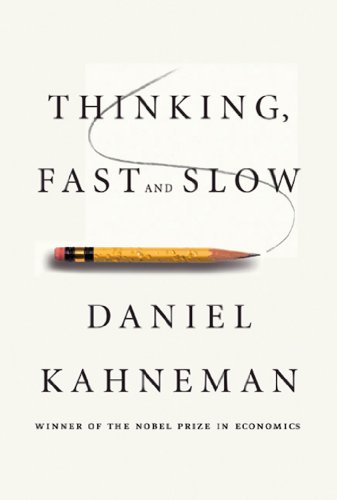
In 2011, Kahneman's name was written in Foreign Policy magazine as one of the top global thinkers. That very year, his book "Thinking, Fast and Slow" got published, summarizing much of his research work and quickly becoming a bestseller.
He is an emeritus professor of psychology and public affairs at Princeton University's Woodrow Wilson School. Besides his academic pursuits, Kahneman is a founding partner of TGG Group, a company providing business and philanthropy consulting services.
Kahneman shares his life with his wife, Royal Society Fellow Anne Treisman. In 2015, The Economist became a testament to his influence in the economic sphere by ranking him as the seventh most influential economist globally.
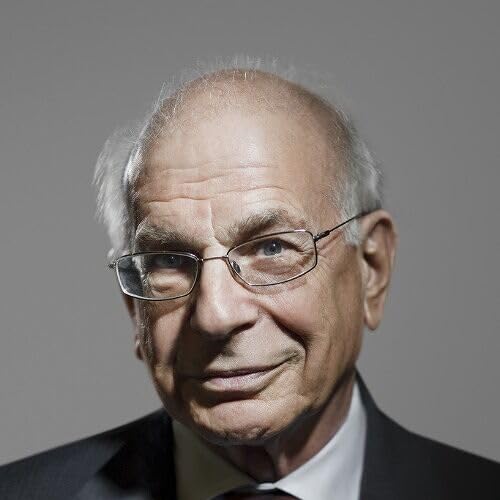
Bio adapted from Wikipedia, the free encyclopedia. Photo by see page for author [Public domain], via Wikimedia Commons.